

2025 Volkswagen ID. Buzz near Mooresville, NC
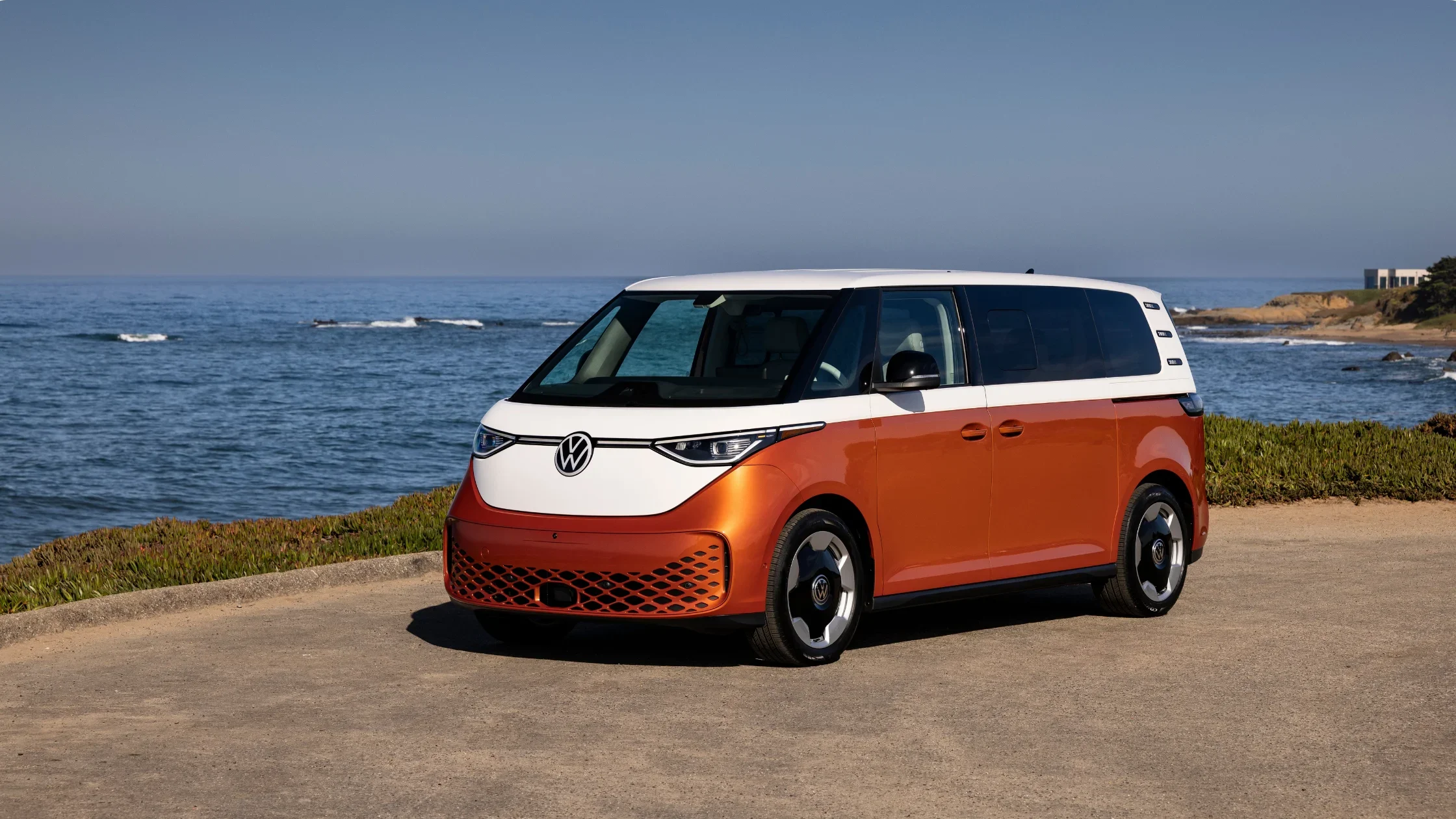
The 2025 Volkswagen ID. Buzz is built on the modular electric drive matrix platform that supports a rear-based electric powertrain and a long wheelbase design focused on efficiency and stability. The structure uses a flat floor battery layout that contributes to balanced weight distribution and a low center of gravity. This configuration supports consistent handling while also maximizing interior volume. The exterior shape incorporates a drag coefficient of 0.29, which assists with range optimization through reduced aerodynamic resistance. The short overhangs and wide stance contribute to packaging efficiency and maneuverability while retaining a shape that clearly signals its aerodynamic intent.
Advanced Electric Motor and Drivetrain Specifications
The standard rear-mounted APP550 permanent magnet synchronous motor produces 282 horsepower and 413 pound-feet of torque. It operates with a two-stage single-speed gearbox and an inverter that manages current conversion, thermal regulation, and motor control. The motor uses a hairpin winding technique that packs square copper wire tightly within the stator, which improves torque development and thermal stability. The rotor uses high-strength permanent magnets that tolerate high thermal loads. The inverter handles AC and DC conversion during both acceleration and recuperation and also oversees temperature regulation for consistent performance.
Models equipped with the 4MOTION® system add a front asynchronous motor that contributes 107 horsepower and 99 pound-feet of torque. The system provides a combined 335 horsepower. There are no mechanical links between the axles. Instead, each motor connects to its respective axle through a differential and a single-speed gearbox. The front motor engages only when traction needs increase, and it responds in hundredths of a second. This creates an electronically controlled all-wheel-drive strategy that stabilizes the vehicle in demanding surface conditions. Top speed for all configurations is electronically limited to 99 miles per hour.
High-Capacity Battery Design and Charging Functionality
A 91-kilowatt-hour battery with 13 cell modules is mounted within a protective housing integrated into the floor structure. The battery system includes an underbody guard, an integrated cooling plate, high-voltage management software, and a multi-part enclosure. The cooling system uses both oil and water channels that improve thermal uniformity across the battery assembly. The design also supports thermal preparation for charging. The battery can be preconditioned for fast charging either automatically through the navigation system or manually through the charging menu. This enables the pack to reach an ideal charging temperature prior to arrival at a charging station, which helps reduce charging time.
The 2025 Volkswagen ID. Buzz accepts DC fast charging up to 200 kilowatts and can move from 10 percent to 80 percent charge in about 26 minutes. When connected to a charger, the ID. Light provides visual confirmation of charge status across the lower windshield area. The Electric Vehicle Route Planner can schedule trips that include multiple charging stops and can also transfer planned stops from a smartphone or web portal to the vehicle.
Disclaimer: Based on charging at 200 kW. Charging times will vary and depend on a variety of factors, including ambient temperature, charger type, battery condition and initial state of charge, vehicle condition, and others. Frequent and consecutive fast charging can permanently decrease battery capacity.
Structural Chassis Features and Ride Control Systems
The MEB platform supports a rigid passenger cell and a skateboard-style layout that lowers the heaviest components into the floor. The front suspension uses a strut configuration with lower control arms, coil springs, telescopic dampers, and an anti-roll bar. The steering rack is positioned ahead of the wheel centerline, which increases stability during cornering. The rear suspension uses a compact multi-link design that improves lateral control and ride consistency. Aluminum components reduce unsprung mass and contribute to predictable handling characteristics.
The standard driving modes include Eco, Comfort, Sport, and Custom. These change steering weight and throttle response. The all-wheel-drive configuration adds Traction mode for low-speed travel on loose or slippery surfaces. A vehicle dynamics control system monitors wheel behavior and coordinates with the ESC unit. It supervises selective braking through the XDS electronic differential lock, which helps maintain cornering precision. Rear-wheel-drive models use a traction control strategy that modulates torque output in millisecond intervals for optimal adhesion.
Regenerative braking operates in two selectable modes. The D position allows coasting when the accelerator is released and then activates recuperation when the brake pedal is applied. The B position increases recuperation upon lift-off for greater energy recovery. Deceleration up to approximately 0.25 g is provided through regeneration, with the hydraulic brakes engaging only for stronger stops. The front brakes use discs that measure 15 inches. The rear drum brakes measure 13 inches and offer advantages in low-use situations common in electric vehicles.
Exterior Utility and Aerodynamic Optimization
The body uses short overhangs, a wide greenhouse, and a long wheelbase of 127.5 inches. This dimensioning gives the vehicle a stable highway posture and maximizes internal room. Aerodynamic wheels in a 20-inch diameter are standard with low rolling resistance tires fitted in staggered sizing. The sliding rear doors are powered and allow entry to the third row. The windows within the sliding doors are fully powered. Keyless access is supported through KESSY with proximity locking and unlocking. The power tailgate includes available Easy Open and Close functionality that responds to foot movement when hands are full. The retractable tow hitch on selected trims hides completely behind the rear bumper and provides a clean exterior surface when not deployed.
Interior Engineering and Space Management Solutions
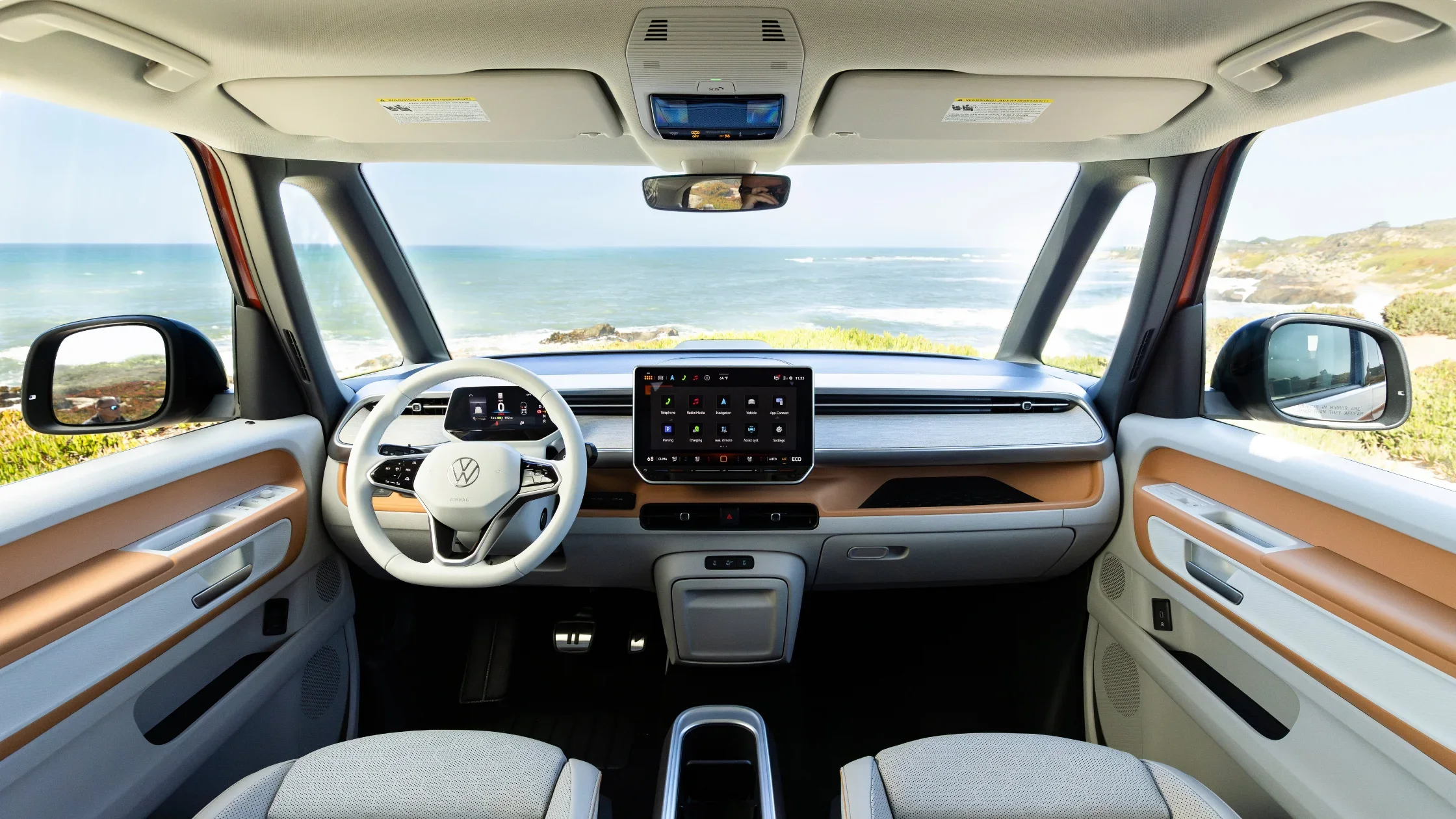
The interior uses a digital instrument cluster and a semi-floating central display to minimize distractions and maintain clear sightlines. The 30-color ambient lighting system offers user-controlled illumination across the cabin. Storage systems are distributed throughout the interior. The Buzz Box functions as a removable modular console that includes dividers designed for multi-use, a front compartment for bottles, and a 5-liter drawer for larger items. Door pockets, dashboard shelves, and fold-out cupholders expand interior storage options. Second- and third-row seating features integrated cupholders and storage.
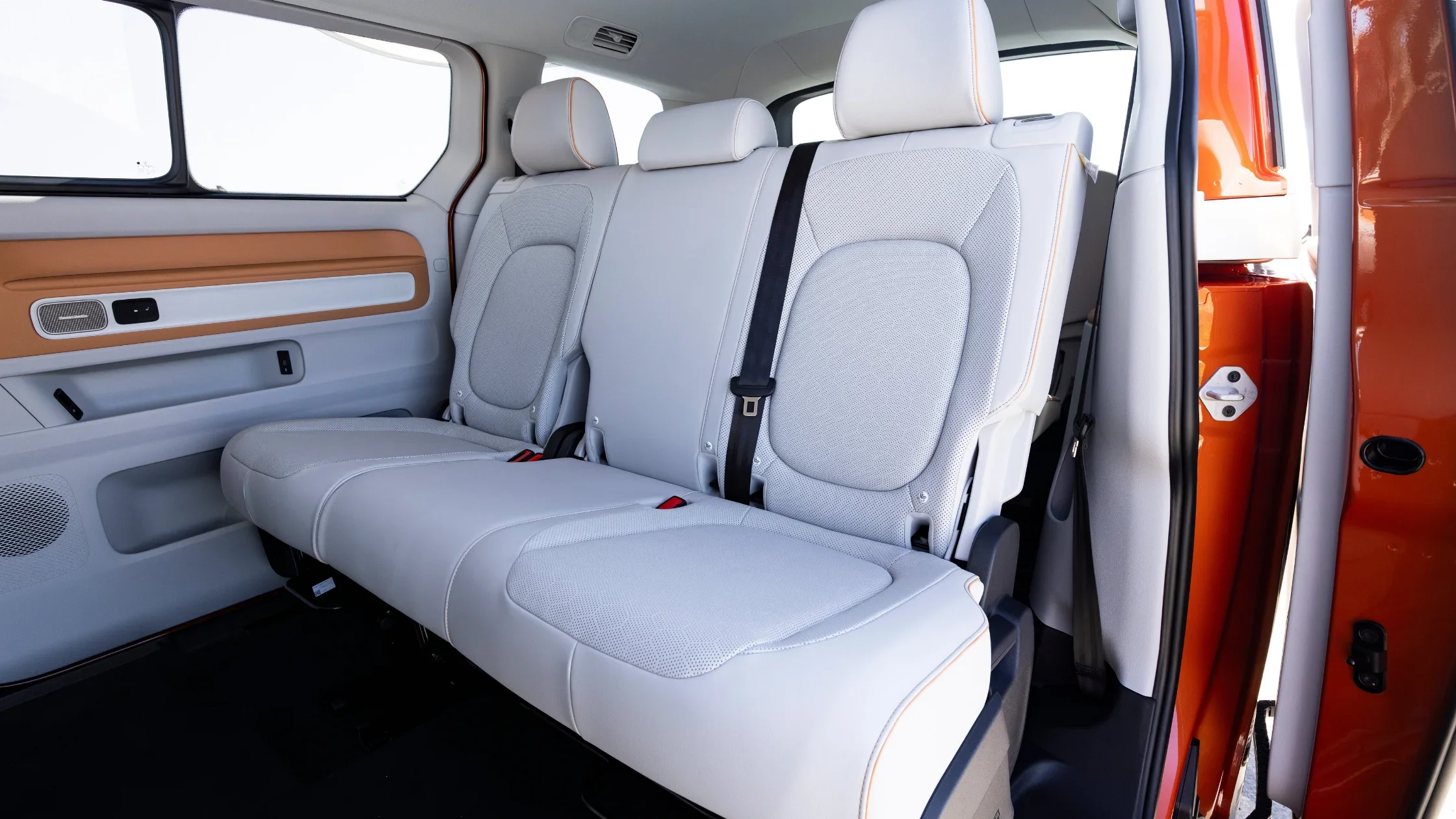
An electrochromic smart glass roof is available. It measures 60.6 inches in length and 36.6 inches in width for a total of 15.4 square feet. The glass uses a polymer-dispersed liquid crystal layer that becomes clear when energized and opaque when de-energized. Additional coatings reduce solar heat infiltration. Three seating rows support up to seven passengers depending on configuration. The second row can slide up to 7.9 inches and fold in a 60 to 40 split. The third row slides, reclines, folds flat, and can be removed individually. Cargo capacity reaches 18.6 cubic feet behind the third row, 75.5 cubic feet behind the second row, and 145.5 cubic feet with seats folded or removed.
Integrated Infotainment and Connectivity Functions
The cockpit provides a 5.3-inch digital display for essential driving data such as state of charge, range estimates, and navigation information. The centrally mounted 12.9-inch display manages climate functions, telematics controls, and vehicle settings. Its interface includes an updated menu structure with a new direct access function for app organization. A Car Control Center provides adjustable shortcuts for frequently used features that remain available without exiting the current app. The redesigned home screen supports configurable tiles for navigation, media, and voice assistant suggestions.
The 2025 Volkswagen ID. Buzz features wireless app connectivity and wireless device charging. A ventilated Qi pad is located near the steering wheel and helps maintain temperature during charging. Up to eight USB-C ports provide multiple power levels across all rows. A 110-volt outlet is installed under the passenger seat, and a 12-volt outlet is positioned in the cargo area. The available Harman Kardon® audio system includes fourteen speakers and a subwoofer for expanded sound coverage. ID. Light communicates driver prompts for navigation cues, braking alerts, readiness to drive, and phone call notifications.
Driver Assistance and Safety Technology Integration
IQ.DRIVE® is standard and uses radar units, a forward camera, and ultrasonic sensors. Travel Assist provides semi-automated steering, acceleration, and braking from 0 to 95 miles per hour when the driver maintains hands on the wheel. Front Assist monitors vehicles, cyclists, and pedestrians and can apply automatic emergency braking in specific situations. Active Side Assist warns of vehicles in adjacent lanes and can countersteer when Lane Assist is active. Rear Traffic Alert identifies cross traffic during reversing and can apply brakes if needed. Adaptive Cruise Control matches the speed of leading vehicles and can bring the vehicle to a stop and then resume movement with driver confirmation. Lane Assist uses cameras to identify lane markings and countersteers if unintentional lane departure is detected. Emergency Assist brings the vehicle to a controlled stop if the driver becomes unresponsive.
Additional features include Exit Warning, Park Distance Control, Park Assist Plus, and Memory Parking. Park Assist Plus scans for spaces and can maneuver into parallel or perpendicular spots automatically. Memory Parking can store up to five maneuvers at speeds below 25 miles per hour for repeated automated parking sequences. Dynamic Road Sign Display identifies posted signs and displays them within the infotainment system. Light Assist manages high beam activation on dark roadways and disengages at lower speeds or when oncoming vehicles are detected.
Visit Keffer Volkswagen near Mooresville, NC
The 2025 Volkswagen ID. Buzz combines advanced electric powertrain engineering with detailed interior flexibility and comprehensive driver assistance technology. It is designed for drivers who want to understand how modern EV systems manage power, charging, and safety through precise and integrated systems. A test drive provides the best way to observe these capabilities in normal driving conditions. The responsive electric motors, the updated infotainment architecture, and the chassis tuning can be evaluated firsthand. Drivers who want to schedule a test drive can contact Keffer Volkswagen near Mooresville, NC, for an appointment that allows them to explore the technical functions of the 2025 Volkswagen ID. Buzz in person.CONTACT US FOR MORE INFORMATION