

2026 Volkswagen Atlas Cross Sport in Huntersville,
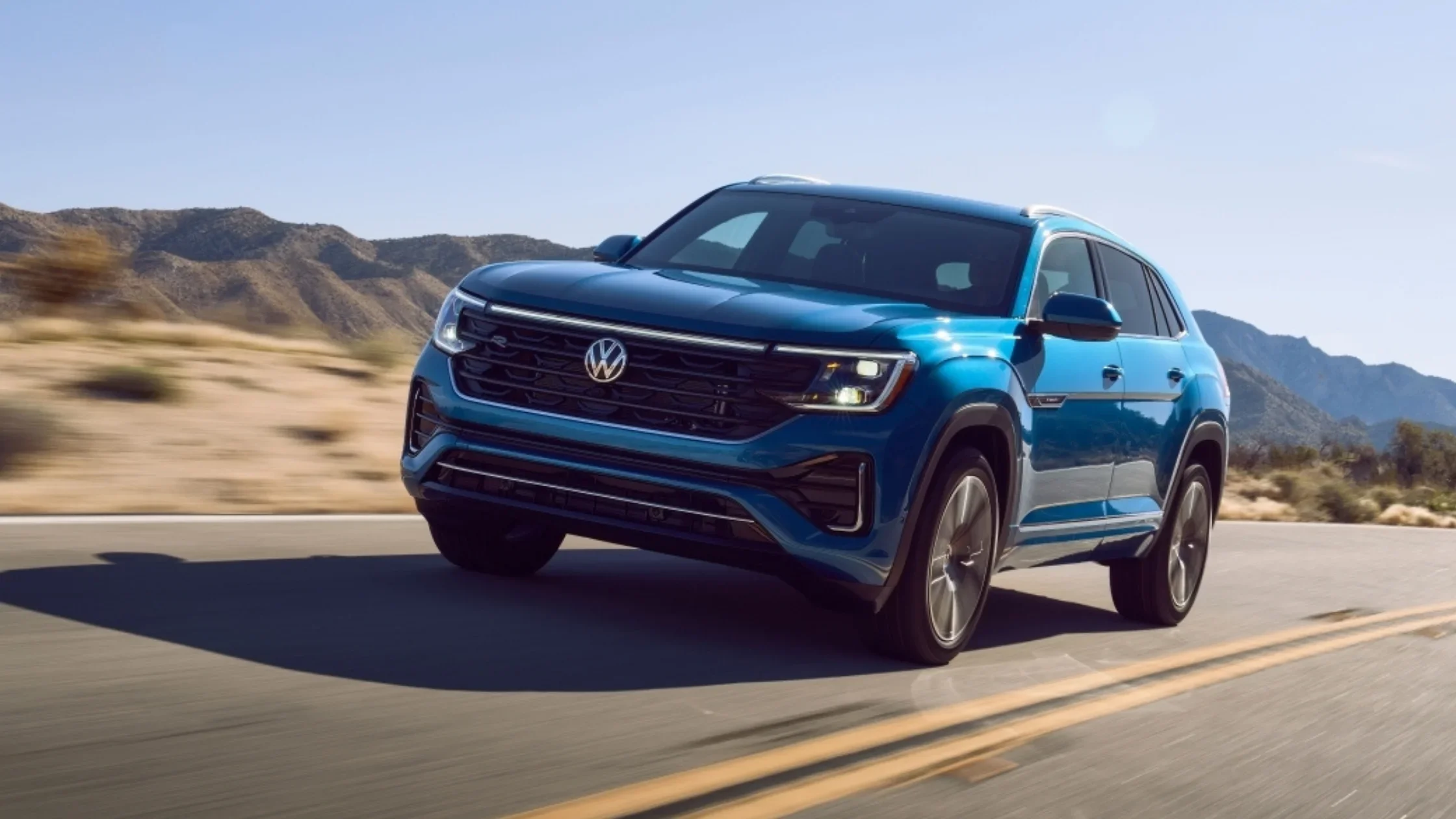
The 2026 Volkswagen Atlas Cross Sport is a midsize five-passenger SUV engineered with a focus on efficiency, structural integrity, and advanced in-vehicle systems. Built on Volkswagen’s Modular Transverse Matrix platform, this model integrates a refined turbocharged engine, a digitally driven cockpit interface, and a comprehensive suite of driver assistance technologies. The design prioritizes aerodynamic efficiency, interior space optimization, and mechanical precision while maintaining consistent performance characteristics across multiple configurations.
The is available in both front-wheel-drive and all-wheel-drive configurations and incorporates updated systems that improve engine responsiveness, cabin functionality, and driver control.
Turbocharged Engine Architecture and Output Characteristics
The 2026 Volkswagen Atlas Cross Sport utilizes a turbocharged 2.0-liter four-cylinder TSI engine from Volkswagen’s EA888 Evo4 engine family. This powertrain produces 269 horsepower and 273 lb-ft of torque, representing an increase in both output and efficiency compared to earlier configurations. The torque curve is broad, with peak torque available between 1,600 and 4,500 rpm, supporting consistent acceleration and load handling across varying driving conditions.
The engine incorporates direct fuel injection and a dual overhead camshaft configuration with 16 valves. Variable cam phasing is applied to both intake and exhaust valves, allowing for precise timing adjustments that improve combustion efficiency and reduce emissions. A variable lift system on the exhaust valves further refines airflow control, contributing to improved engine response.
The exhaust manifold is integrated into the cylinder head, positioning the turbocharger closer to the exhaust flow path. This configuration improves thermal management and reduces turbo lag by allowing faster spool-up. The single-scroll turbocharger compresses intake air, which is then cooled through an intercooling system before entering the combustion chamber.
Power is transmitted through an eight-speed automatic transmission designed to optimize shift timing and fuel efficiency. The transmission adapts to driving inputs and selected drive modes, providing smooth gear transitions and consistent torque delivery. Start-stop technology is integrated into the system, temporarily shutting off the engine during idle conditions to reduce fuel consumption.
Intelligent All-Wheel Drive and Drive Mode Calibration
The available 4Motion all-wheel-drive system uses predictive engagement to distribute torque between the front and rear axles. Under standard driving conditions, the system operates primarily in front-wheel drive to conserve fuel. When traction requirements change, an electro-hydraulic clutch engages the rear axle within fractions of a second.
The system continuously monitors wheel speed, steering input, and acceleration data to determine torque distribution. Up to 50 percent of available torque can be directed to the rear axle. Electronic differential lock functions assist in maintaining traction by selectively braking individual wheels that lose grip.
Drive Mode Select allows the driver to adjust system behavior based on driving conditions. Front-wheel-drive models include Eco, Comfort, Sport, Custom, and Snow modes. All-wheel-drive models include an additional off-road mode. Each mode modifies parameters such as throttle sensitivity, transmission shift points, steering response, and traction control thresholds.
Snow mode reduces throttle response and adjusts transmission behavior to limit wheelspin, while Offroad mode enables features such as Hill Descent Control and modifies braking behavior to improve traction on loose surfaces. The system also adjusts electronic stability control sensitivity based on selected modes.
Aerodynamic Exterior Design and Structural Dimensions
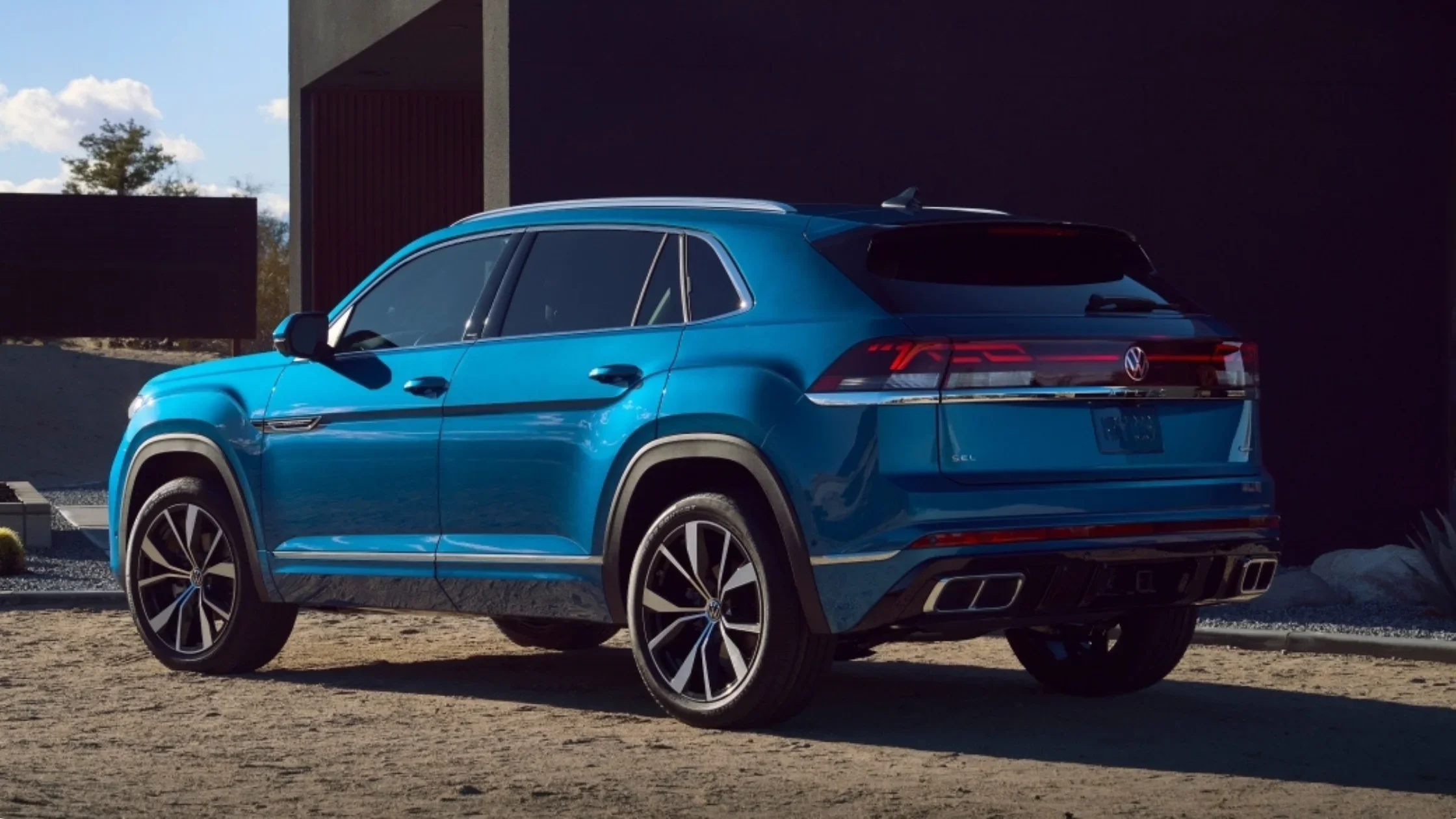
The 2026 Volkswagen Atlas Cross Sport features a streamlined exterior profile with a lower roofline and a sloped rear hatch design. The vehicle measures 195.6 inches in length, 78.3 inches in width, and 68.1 inches in height. These dimensions contribute to a stable stance and improved aerodynamic efficiency. The drag coefficient is rated at 0.34, which supports reduced wind resistance and improved fuel economy.
Ground clearance is set at 6.3 inches, supporting moderate off-road capability and urban driving adaptability. The vehicle includes optimized approach and departure angles that enhance maneuverability on uneven terrain.
Lighting systems are fully LED-based across all trims. Standard features include low and high beam headlights, daytime running lights, and LED taillights. An adaptive front-lighting system adjusts headlight direction based on steering input, improving visibility during cornering. Higher trims incorporate illuminated lightbars and integrated lighting elements within the front grille and rear design.
The exterior structure includes a reinforced front fascia with integrated air intakes and a multi-bar grille design. Roof rails are standard, supporting additional cargo capacity. A panoramic sunroof is available or standard depending on trim, featuring a dual-panel glass design and a powered sunshade.
Interior Configuration and Spatial Engineering
The interior of the 2026 Volkswagen Atlas Cross Sport is designed to maximize passenger space and ergonomic accessibility. The cabin provides seating for five occupants with a total passenger volume of 112 cubic feet. Front headroom measures 39.4 inches, while rear headroom measures 37.8 inches. Legroom is 41.7 inches in the front and 40.4 inches in the rear, ensuring consistent space distribution.
Seating surfaces include standard leatherette materials, with higher trims offering leather upholstery and enhanced seat construction. The front seats include heating and ventilation functions, along with power-adjustable configurations. Select trims incorporate memory settings and lumbar support adjustments, as well as integrated massage functionality.
The second-row bench seat features a 60/40 split design with a reclining backrest. This configuration allows for flexible cargo and passenger arrangements. Maximum cargo capacity reaches 77.6 cubic feet with the rear seats folded, while standard seating provides 40.3 cubic feet of storage space.
The cabin includes multiple storage compartments, USB-C ports, and power outlets. Climate control systems vary by trim, with multi-zone automatic climate control available. Interior ambient lighting systems provide up to 30 selectable color options, integrated into the dashboard and door panels.
Digital Cockpit and Infotainment Systems
The 2026 Volkswagen Atlas Cross Sport incorporates a digital interface designed to centralize vehicle information and connectivity functions. A 12-inch floating infotainment display serves as the primary control interface, supporting touch input, voice commands, and smartphone integration. Wireless App-Connect allows compatibility with Apple CarPlay® and Android Auto™ systems.
The Volkswagen Digital Cockpit Pro features a 10.25-inch configurable instrument cluster. Drivers can customize display layouts to include navigation, vehicle data, driver assistance information, and communication features. Navigation-equipped models support full-screen map display within the digital cluster.
Connectivity features include Bluetooth® pairing for multiple devices, wireless charging, and USB-C ports with fast-charging capability. The system supports SiriusXM® with 360L and HD radio functionality.
An available Harman Kardon® audio system includes a 12-speaker configuration with a 400-watt amplifier. Speaker placement is distributed throughout the cabin, including door-mounted components, a center channel speaker, and a rear-mounted subwoofer. This configuration is designed to deliver balanced audio output across all seating positions.
The infotainment system also supports an AI-enabled voice assistant through subscription services, allowing natural language interaction with vehicle systems.
Chassis Construction and Suspension Dynamics
The 2026 Volkswagen Atlas Cross Sport is built using a unitary body structure composed of high-strength and ultra-high-strength steel. Advanced welding techniques, including laser clamp welding, are used to enhance structural rigidity while maintaining reduced weight.
The suspension system includes an independent front strut configuration and a rear multilink setup. Coil springs and telescopic dampers are used at all four corners to provide balanced ride quality and handling stability. This configuration supports consistent road contact and improved cornering performance.
The braking system consists of vented disc brakes with a diameter of 13.2 inches in the front and 12.2 inches in the rear. Anti-lock braking and electronic brake pressure distribution are integrated into the system to improve stopping performance and stability.
Electric power-assisted steering includes a variable ratio that adjusts steering effort based on vehicle speed. The steering system provides a turning circle of approximately 40 feet, supporting maneuverability in confined spaces.
Integrated Safety Systems and Driver Assistance Technologies
The 2026 Volkswagen Atlas Cross Sport incorporates both passive and active safety systems designed to enhance occupant protection and driver awareness. The vehicle includes six airbags positioned throughout the cabin, along with electronic stability control and a standard rearview camera.
The IQ.DRIVE system integrates multiple driver assistance features using radar sensors, cameras, and ultrasonic sensors. Travel Assist provides semi-automated driving capability by combining adaptive cruise control and lane centering functions. The system can assist with steering, acceleration, and braking within defined operational limits.
Front Assist includes forward collision warning and automatic emergency braking with pedestrian and cyclist detection. The system monitors potential hazards and can apply braking force when necessary. Adaptive Cruise Control maintains a set speed and distance from vehicles ahead, with stop-and-go functionality in traffic conditions.
Lane Assist uses camera-based detection to monitor lane markings and provide corrective steering input when unintended lane departure is detected. Emergency Assist monitors driver input and can bring the vehicle to a controlled stop if no driver activity is detected.
Additional systems include Rear Traffic Alert, which monitors cross-traffic when reversing, and Side Assist, which detects vehicles in adjacent lanes. Exit Warning alerts occupants of approaching vehicles or cyclists when opening doors.
Parking systems include Park Distance Control with ultrasonic sensors, Maneuver Braking for low-speed collision mitigation, and available Park Assist for automated steering during parking maneuvers. An available Area View system uses multiple cameras to provide a composite overhead view of the vehicle’s surroundings.
Dynamic Road Sign Display uses a forward-facing camera to detect road signs and display relevant information within the digital cockpit. A head-up display projects key driving information into the driver’s line of sight.
Schedule a Test Ride Today
Drivers interested in evaluating the 2026 Volkswagen Atlas Cross Sport can schedule a test drive through Keffer Volkswagen in Huntersville, NC. This provides an opportunity to examine the vehicle’s turbocharged engine output, transmission behavior, and drive mode adaptability under controlled conditions. The digital cockpit interface and infotainment system can be assessed for usability and responsiveness during operation. The available all-wheel-drive system and driver assistance technologies can also be observed in dynamic driving scenarios. Scheduling a test drive allows for a detailed evaluation of the vehicle’s engineering systems and overall performance characteristics.CONTACT US FOR MORE INFORMATION